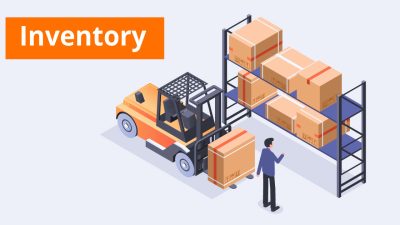
Software for order management system has emerged as a game-changer in today’s fast-paced business environment. It simplifies the sales process by automating order tracking, inventory management, and customer communication, all of which are essential for efficient operations. As businesses strive to enhance their customer experience and operational efficiency, understanding the features and benefits of these systems becomes crucial.
With the rise of e-commerce and global trade, effective order management has never been more vital. This software not only helps businesses manage orders but also allows for real-time updates and insights, which are instrumental in making informed decisions. By integrating various functionalities, it ensures that businesses can respond swiftly to market changes and customer needs.
Technology, in its many forms, has been a pivotal force in shaping human civilization. From the invention of the wheel to the advent of the internet, technological advancements have continually transformed the way we live, work, and communicate. This article delves into the evolution of technology through various eras, highlighting key innovations and their impacts on society.
The Dawn of Civilization
The story of technology begins in prehistoric times when early humans utilized simple tools made from stone, wood, and bone. The invention of the wheel around 3500 BC in Mesopotamia marked a significant milestone, enabling more efficient transportation and trade. This innovation laid the groundwork for future advancements by facilitating the movement of goods and people.
The Agricultural Revolution
Fast forward to around 10,000 BC, humanity transitioned from nomadic hunter-gatherer societies to agrarian communities. The Agricultural Revolution brought about the domestication of plants and animals, leading to the establishment of permanent settlements. Innovations such as plowing and irrigation systems allowed for increased food production, which supported larger populations and gave rise to complex societies.
The Age of Metals
The discovery of metallurgy in the Bronze Age (circa 3300 BC) introduced the use of metals for tools and weapons. This era marked a significant leap in technological capabilities, as bronze replaced stone tools, making them more durable and effective. The subsequent Iron Age further revolutionized technology, with iron tools and weapons becoming vital for agriculture, construction, and warfare.

The Classical Era: Innovations in Science and Engineering
The Classical Era (circa 500 BC to 500 AD) saw remarkable advancements in science and engineering, particularly in ancient Greece and Rome. Notable figures such as Archimedes and Euclid contributed to mathematics and physics, laying foundational principles still relevant today. The Romans showcased engineering prowess with the development of aqueducts, roads, and monumental architecture, which not only served practical purposes but also demonstrated the power of their civilization.
The Middle Ages: A Time of Stagnation and Renewal
Following the fall of the Roman Empire, Europe entered the Middle Ages, a period often characterized by stagnation in technological progress. However, this era also saw the preservation of knowledge by Islamic scholars, who translated and built upon ancient texts. Innovations such as the astrolabe and advancements in optics and mathematics emerged from this time, setting the stage for the Renaissance.
The Renaissance: A Rebirth of Innovation
The Renaissance (14th to 17th century) marked a revival of arts and sciences in Europe. The invention of the printing press by Johannes Gutenberg in the mid-15th century revolutionized the dissemination of knowledge, making books more accessible to the masses. This played a crucial role in promoting literacy and education, leading to an intellectual awakening across Europe.

The Industrial Revolution: A Turning Point
The Industrial Revolution, which began in the late 18th century, was a transformative period that fundamentally altered society. The introduction of steam power and mechanization increased production capabilities and efficiency. Factories sprang up, leading to mass production and urbanization as people flocked to cities for work. This era also saw innovations such as the spinning jenny, the power loom, and the steam engine, which propelled industries like textiles and transportation forward.
The 20th Century: The Birth of Modern Technology
The 20th century heralded unprecedented technological advancements. The invention of the telephone by Alexander Graham Bell and the radio revolutionized communication. The development of the computer in the mid-20th century marked a significant leap, leading to the Information Age. The introduction of the internet in the late 20th century transformed the way people connect, share information, and conduct business.
The Digital Age: Technology at Our Fingertips
As we entered the 21st century, technology became increasingly integrated into daily life. Smartphones, social media, and artificial intelligence are now ubiquitous, shaping how we communicate, work, and interact with the world. The rise of big data and cloud computing has transformed industries, enabling businesses to operate more efficiently and make data-driven decisions.
The Future of Technology
Looking ahead, the future of technology holds exciting possibilities. Emerging fields such as biotechnology, renewable energy, and quantum computing promise to tackle some of the world’s most pressing challenges. As technology continues to evolve, ethical considerations surrounding privacy, security, and the impact on employment will be crucial in shaping a responsible and inclusive future.
Conclusion
The evolution of technology is a testament to human ingenuity and adaptability. From primitive tools to advanced digital systems, each innovation has built upon the last, driving society forward. As we stand on the brink of further technological advancements, it is essential to embrace change while ensuring that the benefits are shared equitably across the globe.
Answers to Common Questions
What is an order management system?
An order management system is software that facilitates the processing of orders, from order placement to fulfillment, including inventory tracking and customer notifications.
How can order management software benefit my business?
It streamlines the order process, reduces errors, enhances customer experience, and provides valuable insights for better decision-making.
Is order management software easy to integrate with existing systems?
Most modern order management solutions are designed to integrate seamlessly with popular e-commerce platforms and ERP systems.

What features should I look for in order management software?
Key features include inventory management, real-time order tracking, automated notifications, reporting tools, and customer management capabilities.
Can small businesses benefit from order management systems?
Absolutely, even small businesses can gain efficiency and improve customer service through effective order management software.